
Mining
Operational continuity begins long before extraction starts.
The mining challenge
Mining relies on timely availability of equipment, materials and components, often in remote sites where replacements are difficult. Inventory choices thus affect production continuity, maintenance scheduling and long-term capital planning. Massive infrastructure investment spans hyperscale and colocation facilities.
Remote operations increase inventory exposure
Mining assets frequently operate in geographically isolated environments where supplier networks, transport infrastructure and replacement options are inherently limited:
Extended replenishment lead times
Limited sourcing alternatives
Remote distribution networks
High dependency on local inventory availability
Increased operational exposure during supply disruption
Inventory availability becomes a prerequisite for operational continuity rather than a logistics objective.
Critical equipment depends on strategic spare availability
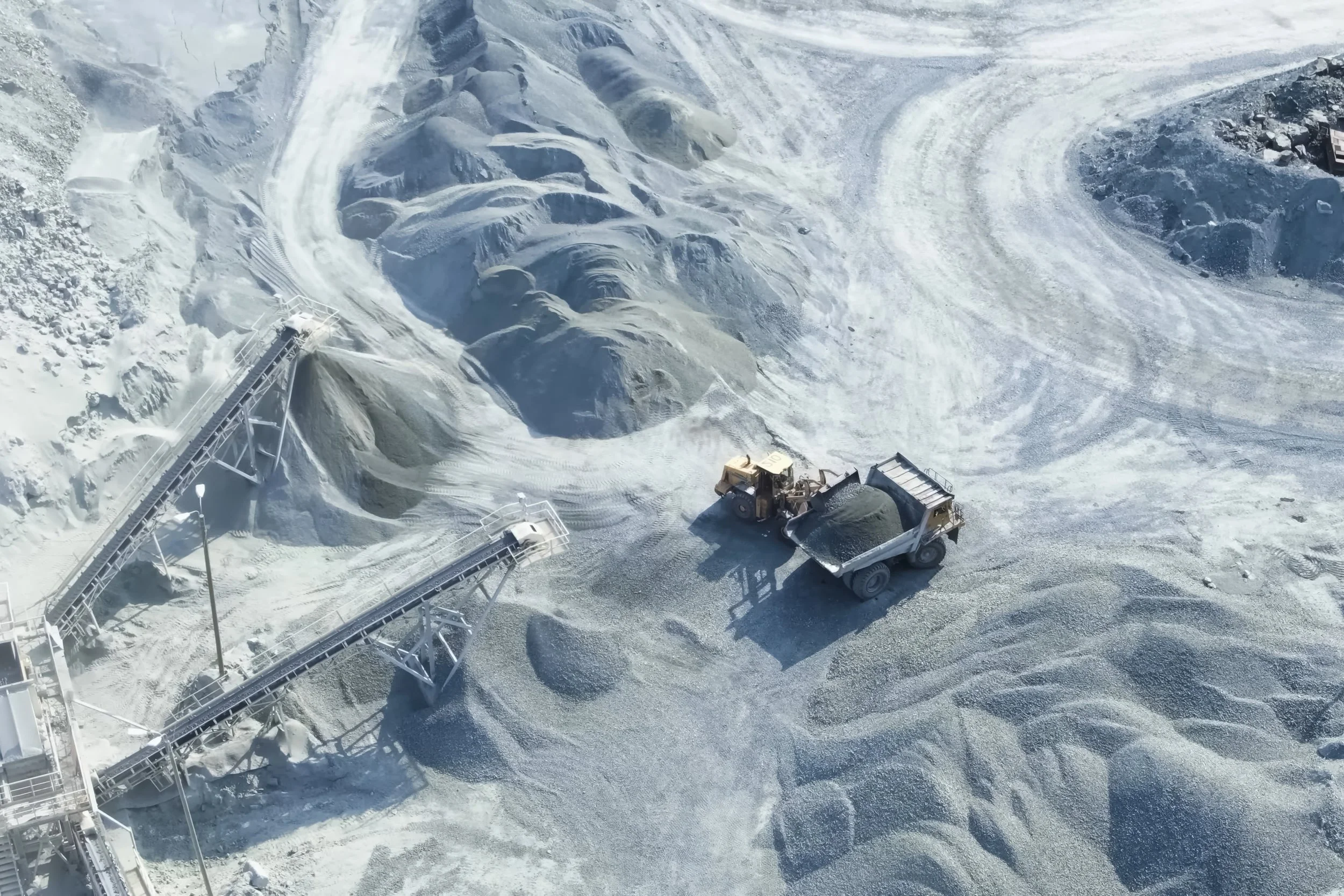
Modern mining relies upon highly specialised equipment operating under continuous mechanical stress:
Heavy mobile equipment
Crushing and processing systems
Pumps, motors and electrical infrastructure
Conveyor systems
Maintenance and repair components
The operational consequence of a missing component frequently exceeds its purchase value by several orders of magnitude.
Infrastructure deployment creates complex capital commitments.
Large-scale data center programmes require inventory long before facilities become operational:
Multi-site campus developments delivered over several years
Long procurement lead times for critical infrastructure
Commissioning inventory acquired before revenue generation begins
Phased deployment across multiple geographic locations
Capacity expansion aligned with customer demand and energy availability
Long asset lifecycles increase capital complexity
Mining equipment often remains operational for decades while maintenance requirements evolve continuously.
Legacy equipment requiring specialist components
New and existing asset fleets operating simultaneously
Long ownership horizons
Progressive equipment upgrades
Inventory supporting ageing infrastructure
Inventory governance must evolve alongside the operational lifecycle of each asset.
Capital remains committed long before value is realised
Inventory is frequently acquired months or years before it is consumed.
Project materials, strategic spare parts and long-lead equipment may remain on the balance sheet for extended periods before creating operational value.
Managing this capital requires continuous alignment between commercial intent, operational planning and ownership decisions.
The financial impact
Working capital committed across extended operational horizons
Mining inventory often supports equipment with exceptionally long service lives. Capital must therefore remain available without unnecessarily increasing financial exposure.
Production interruption creates disproportionate cost
The financial impact of equipment downtime frequently exceeds the cost of the missing inventory itself. Maintaining availability reduces operational disruption while protecting commercial performance.
Progressive obsolescence
Equipment upgrades, engineering changes and mine development gradually alter inventory requirements. Without continuous governance, inventory may lose operational relevance long before financial provisions recognise its obsolescence.
Distributed inventory ownership
Mining inventory is commonly distributed across:
Mine sites
Processing facilities
Maintenance workshops
Regional warehouses
Project locations
Understanding ownership across the enterprise becomes essential for effective capital allocation.
How Procura supports mining
Critical inventory governance
We establish governance structures that distinguish operationally critical inventory from routine inventory, supporting both resilience and capital discipline.
Operational criticality
Critical spare identification
Lead-time assessment
Asset dependency
Operational consequence analysis
Strategic inventory positioning
Result: critical components remain available where operational exposure is greates
Lifecycle-based inventory management
Inventory governance remains aligned with changing equipment populations throughout the operational life of the mine.
Lifecycle alignment
Asset lifecycle mapping
Legacy inventory management
Equipment transition planning
Obsolescence monitoring
Continuous inventory review
Result: inventory remains aligned with operational requirements throughout the asset lifecycle.
Enterprise capital governance
Inventory ownership is managed as part of enterprise capital allocation rather than as an isolated operational activity.
Enterprise visibility
Ownership transparency
Cross-site inventory visibility
Working capital governance
Commercial alignment
Continuous decision support
Result: Inventory supports operational continuity while maintaining long-term capital efficiency.
Take the next step
Discover how Procura helps organisations manage inventory as an enterprise capability
Discuss your inventory challenges with us
Discover Procura's proprietary inventory platform
Please see our Privacy & Cookie Policy regarding how we will handle this information.